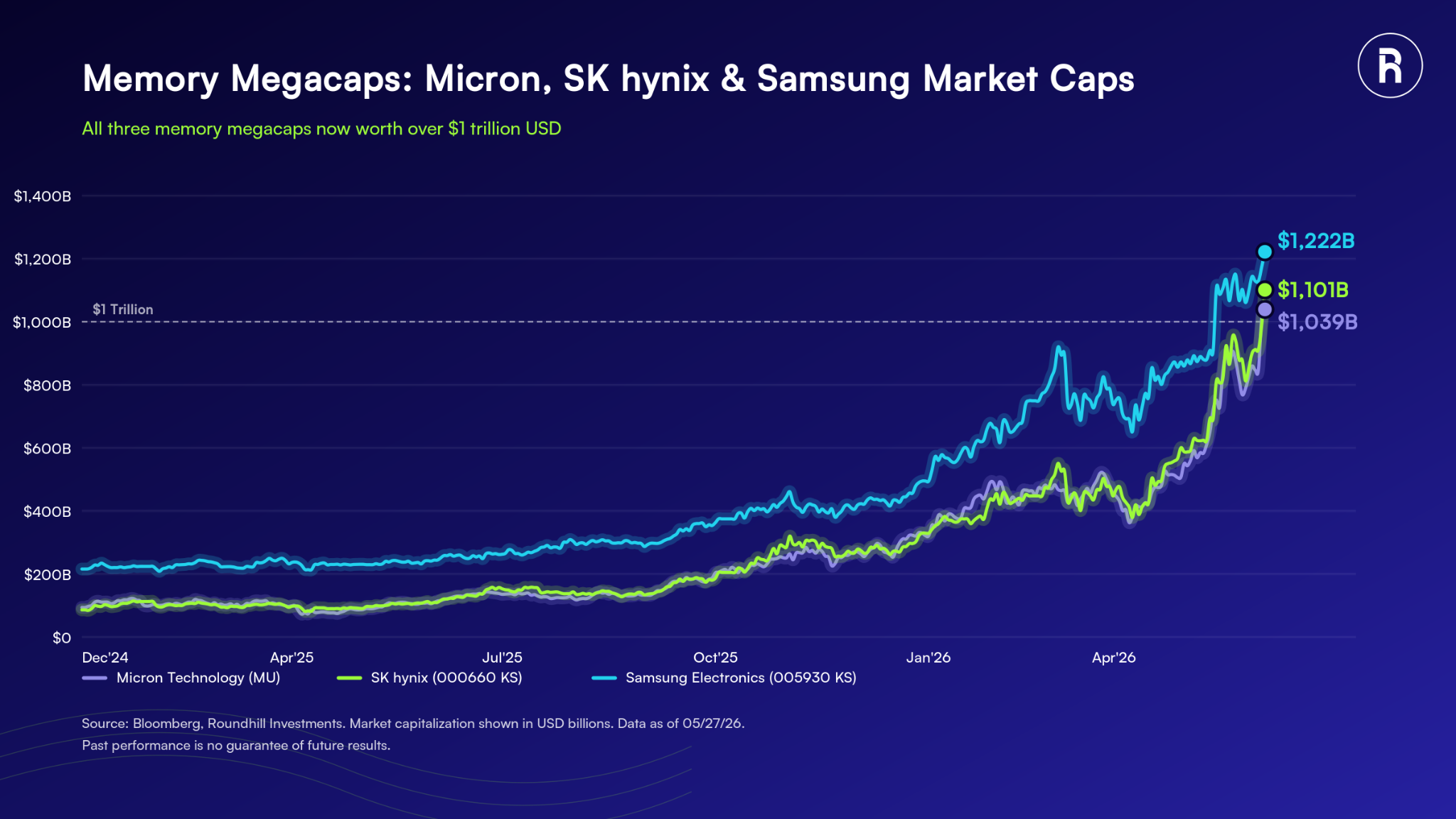
The three biggest memory producers in the world, Samsung Electronics (005930 KS), SK hynix (000660 KS) and Micron (MU) have all eclipsed $1 trillion in market capitalization, joining a small cohort of companies sharing the same accolade. More recently, this milestone has drawn scrutiny.
For example, a recent Morningstar blog cautioned memory ETF investors to not forget fundamentals, raising several pointed questions about the sustainability of the trade. Their concerns included:
- History suggests caution: The memory industry has repeatedly gone through boom and bust cycles, and Morningstar suggested investors may be ignoring that history.
- Memory companies lack moats: Morningstar suggested that memory is ultimately a commodity business, where new supply can always enter the market and erode pricing power over time, leaving companies without a true moat to protect their profitability.
- The rally may be momentum-driven, not fundamental: Morningstar implied that much of the enthusiasm around memory stocks reflects excitement about AI rather than a sober analysis of earnings, margins, and supply dynamics.
- Valuations have surged: Memory stocks have risen dramatically, and Morningstar questioned whether prices have run ahead of what the underlying business fundamentals actually support.
While we respect the past, we believe this isn't a repeat of history and we need to look back at where the memory industry has been to properly show where it’s going.
History Does Suggest Skepticism But is History Right?
It is fact that memory chip cycles have historically been known for their boom and bust nature. One of the most well-known booms of the memory cycle was in the mid-1990s. This was when Microsoft launched Windows 95 in August 1995, which made personal computers more accessible to consumers as opposed to just businesses.
During this period, DRAM content per computer quadrupled from 1-2 megabits to 4-8 megabits. Manufacturers were caught flat-footed in the upswing in demand for memory and built fabrication factories, or fabs, in order to meet the at-the-time unprecedented demand. Eventually, this led to an oversupply of the market.
We can also see this boom and bust nature occur again in the mid-2010s when the iPhone 7 came to market. This was when Apple chose to upgrade to a 32-gigabyte base model from the previous 16-gigabyte offering. While seemingly a small jump in memory for personal consumers, this was considered massive at scale and again created a large upswing in demand for memory, further investments in memory production, and then led to an eventual price deflation after the upgrade cycle ran its course.
What do these threads have in common? A breakthrough in technology, a drastic increase in memory demand, and manufacturers increase supply, ultimately outpacing demand. In a nutshell: excess supply floods the market and crushes memory prices.
Is history still a reliable guide? The memory chip industry has fundamentally shifted. Memory is no longer tied to consumer device upgrade cycles. It's now bound to the capacity of AI infrastructure and demand for compute. It’s forecasted to be a much larger addressable market than a smartphone refresh, with far greater growth potential.
Consequently, DRAM (dynamic random access memory) and NAND (Not-and) prices have surged over 5 times since January 2024, leading hyperscalers to request long-term commitments for bandwidth certainty. Historically, long-term supply agreements in memory were loose arrangements that shifted with market conditions. That model appears to have changed. On its January 2026 earnings call, SK hynix described today's agreements as reflecting strong mutual commitments between customers and suppliers, driven by the capital intensity of cutting-edge memory production. Micron has reported similar long-term agreement conditions.
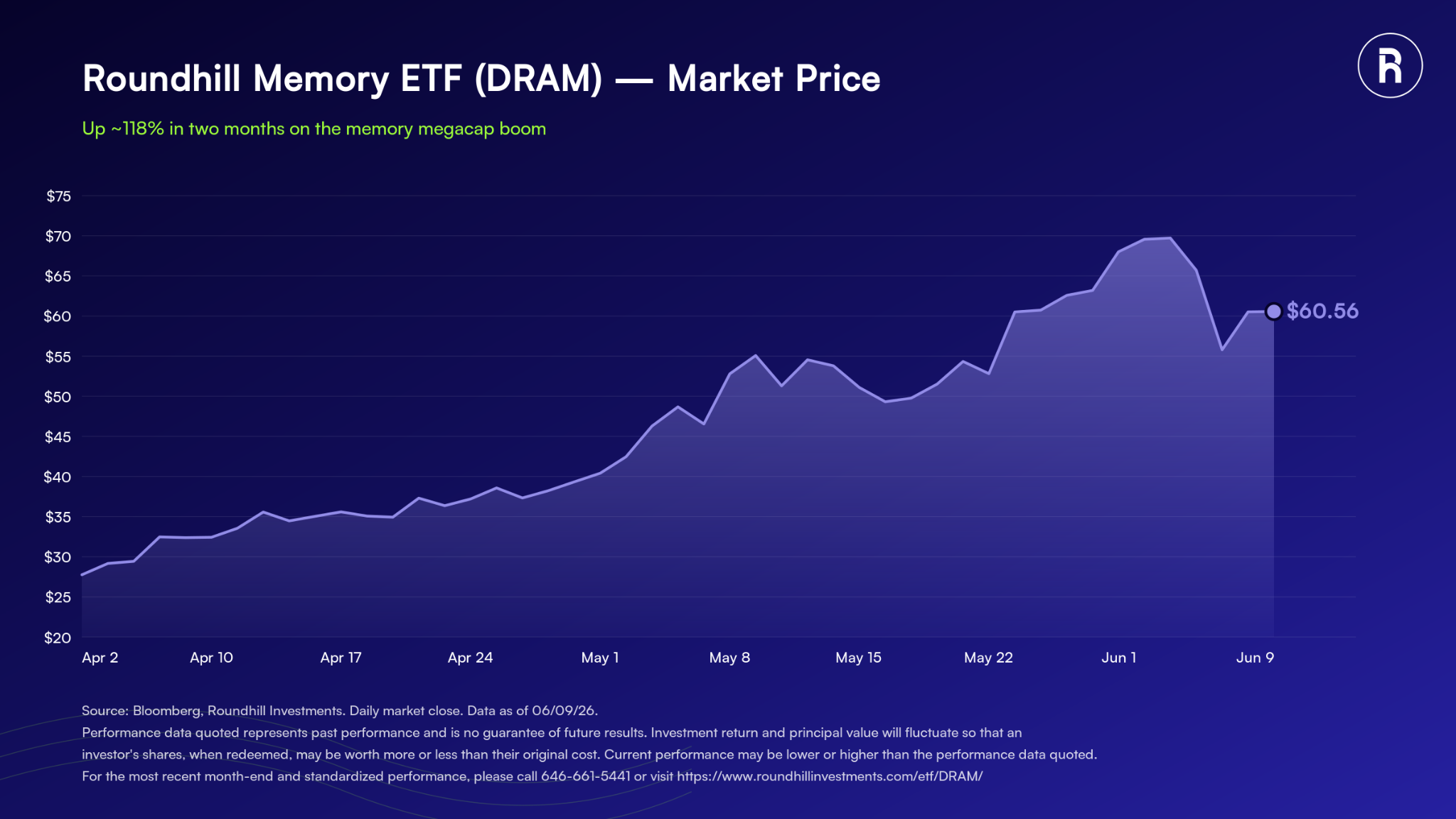
The Roundhill Memory ETF (DRAM) comes at a time when the world's largest memory producers are selling out years in advance under binding terms, offering investors precise exposure to the companies sitting at the center of AI's most critical infrastructure constraint.
Memory Has a Moat: Complexity
Not all memory is created equal. The memory powering AI systems today, known as High Bandwidth Memory (HBM), is an entirely different product than the memory inside today’s computers and phones. It is engineered specifically for AI workloads and requires precise manufacturing conditions. According to Goldman Sachs, SK Hynix, Samsung, and Micron, control virtually all of global HBM supply. This is reflective of an industry that has consolidated significantly over decades while accumulating expertise that cannot be replicated overnight. In our view, that manufacturing complexity is the moat, and it is what created the three largest players in the first place.
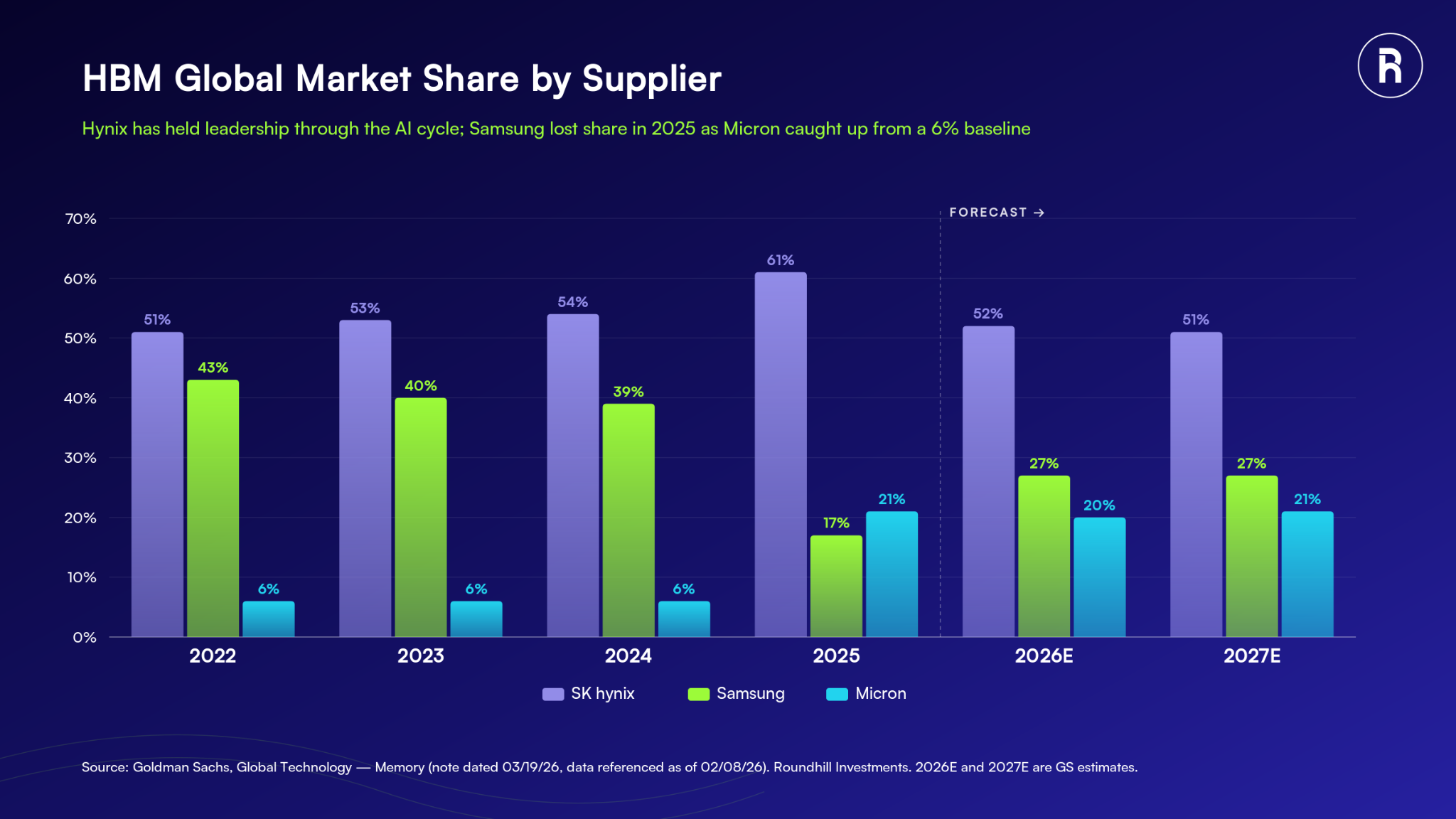
This challenges the norms of the old cycle. In prior booms, rising demand attracted new supply and eventually crashed prices. Today, the constraint is not capital or willingness, it is know-how. Even SK Hynix, which controls roughly 58% of global HBM supply as of the latest fiscal quarter, announced on June 2 it plans to double wafer capacity over five years while warning the shortage runs through 2030.1 Building a new plant takes at least 3 years. A greenfield site takes more than five.
In addition, ASML, the sole manufacturer of the extreme ultraviolet lithography (EUV) machines required to build leading-edge memory, entered 2026 with a record €38.8 billion backlog exceeding its entire projected annual sales, with individual EUV systems carrying more than a 12-month lead time. The constraint cannot be solved quickly.
The Fundamentals Driving Memory
Earnings, revenue, and margins estimates for memory stocks illustrate the secular adoption of AI underway. According to Bloomberg consensus estimates, Samsung, SK hynix, and Micron are estimated to be amongst the top ten most profitable companies in the world in 2027.
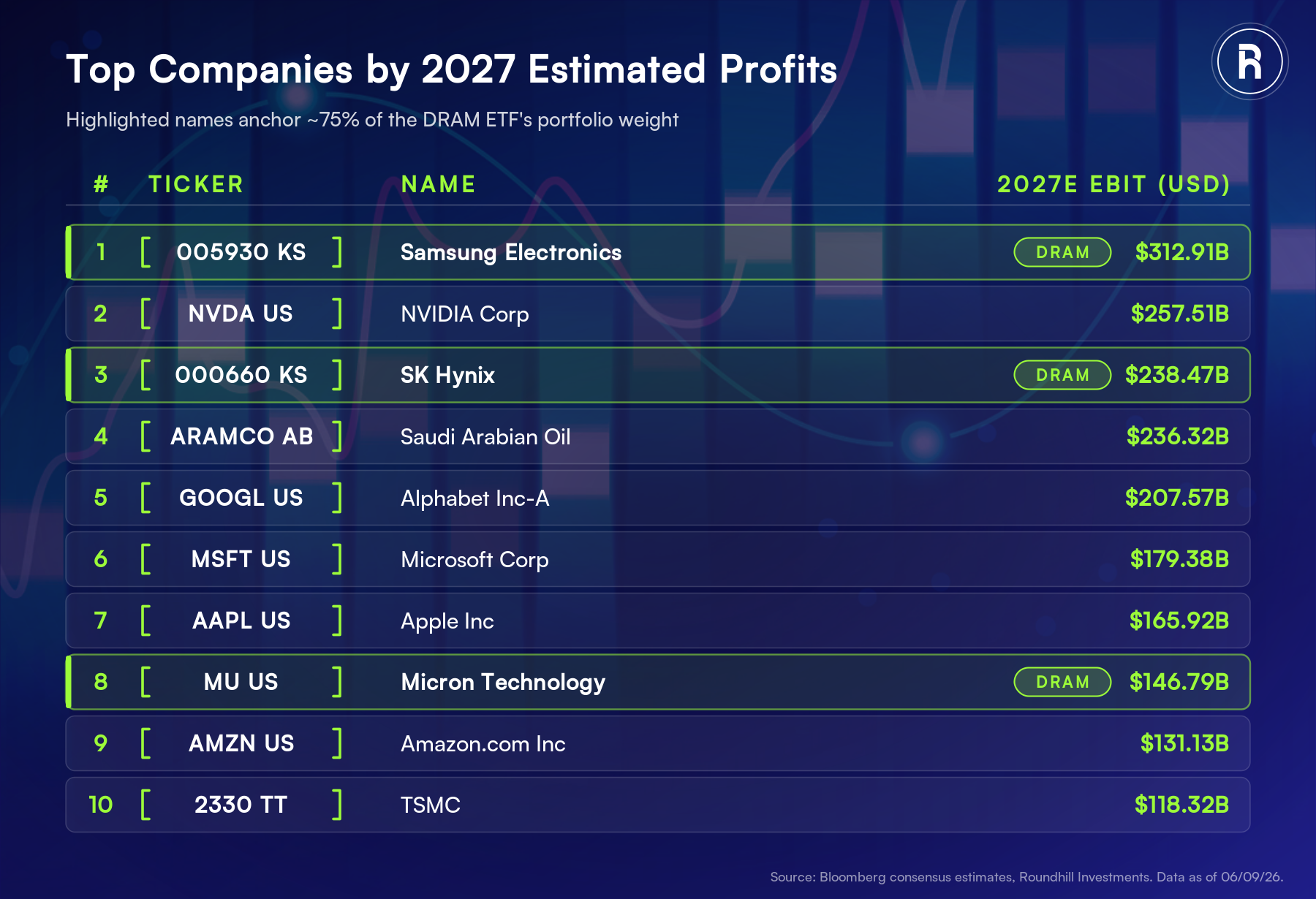
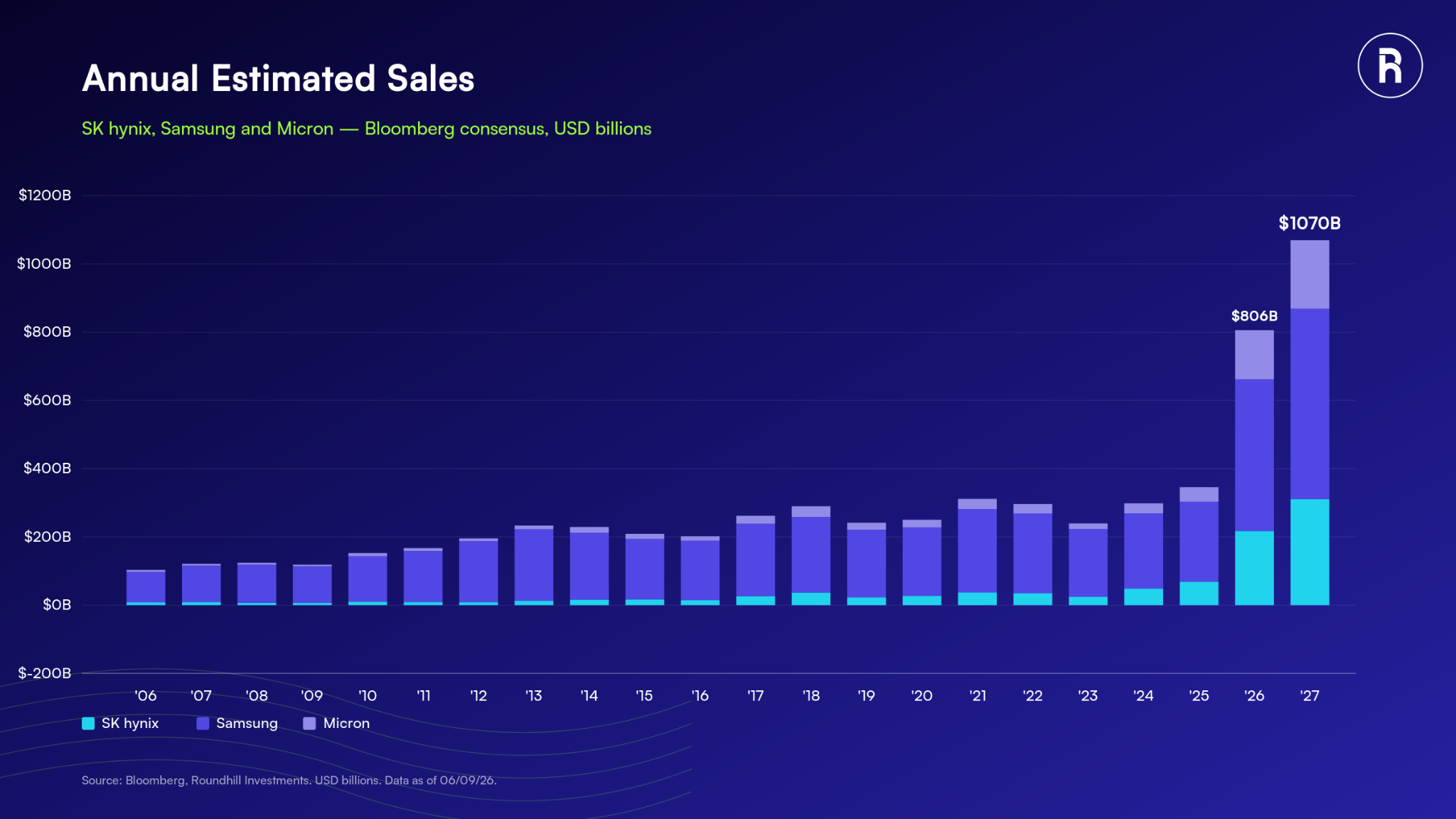
These profit estimates combine for a collective bottom line of $704 billion for 2027, while generating over $1 trillion in aggregate revenue.

Meanwhile, margins appear to be indicating a new era of profitability for the memory industry. Operating gross profit margins for Samsung, SK hynix and Micron sit at record levels after surpassing the prior highs established in 2018.
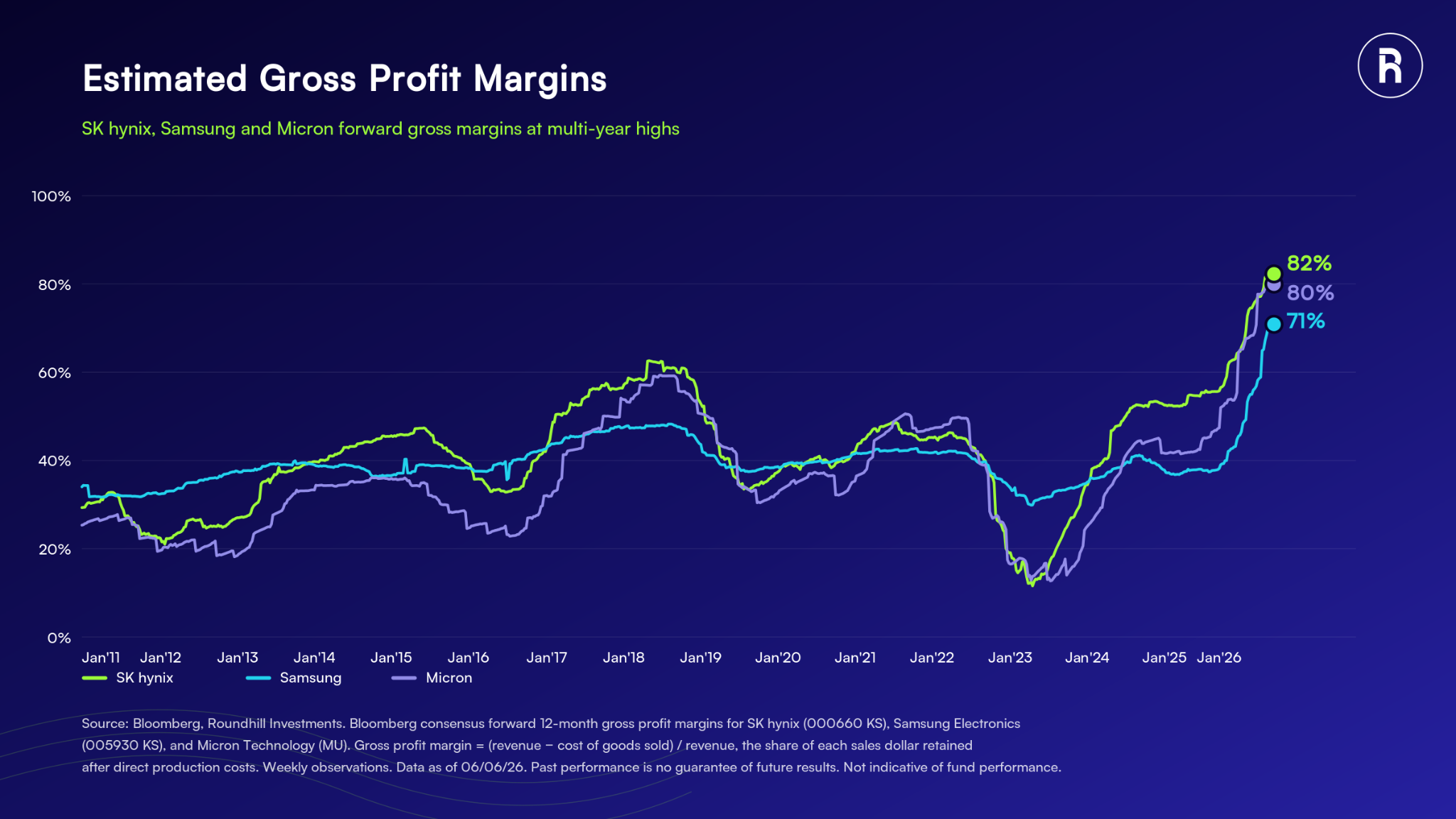
These numbers are historic by memory standards. Even when growth moderates, the memory industry has the potential to settle at a higher baseline never seen before, supported by generative AI's growing integration into the world economy.
Price Discovery in a New Era of Profitability
This combination of historic price action and aggressive upward fundamental revisions is indicative of an industry undergoing a significant rerating powered by earnings growth and margin expansion.
In our view, memory stocks are entering a new era of price discovery. SK hynix and Samsung are two clear, important examples. For the better part of the past decade, both stocks traded within a certain next twelve month (NTM) price to book regime, constrained by the boom and bust profitability that defined the industry. That ceiling may no longer apply. Estimated return on equity for both companies has surged to levels that have no historical precedent in memory, and with it, the valuation framework that investors have long used to judge these stocks deserves to be revisited.
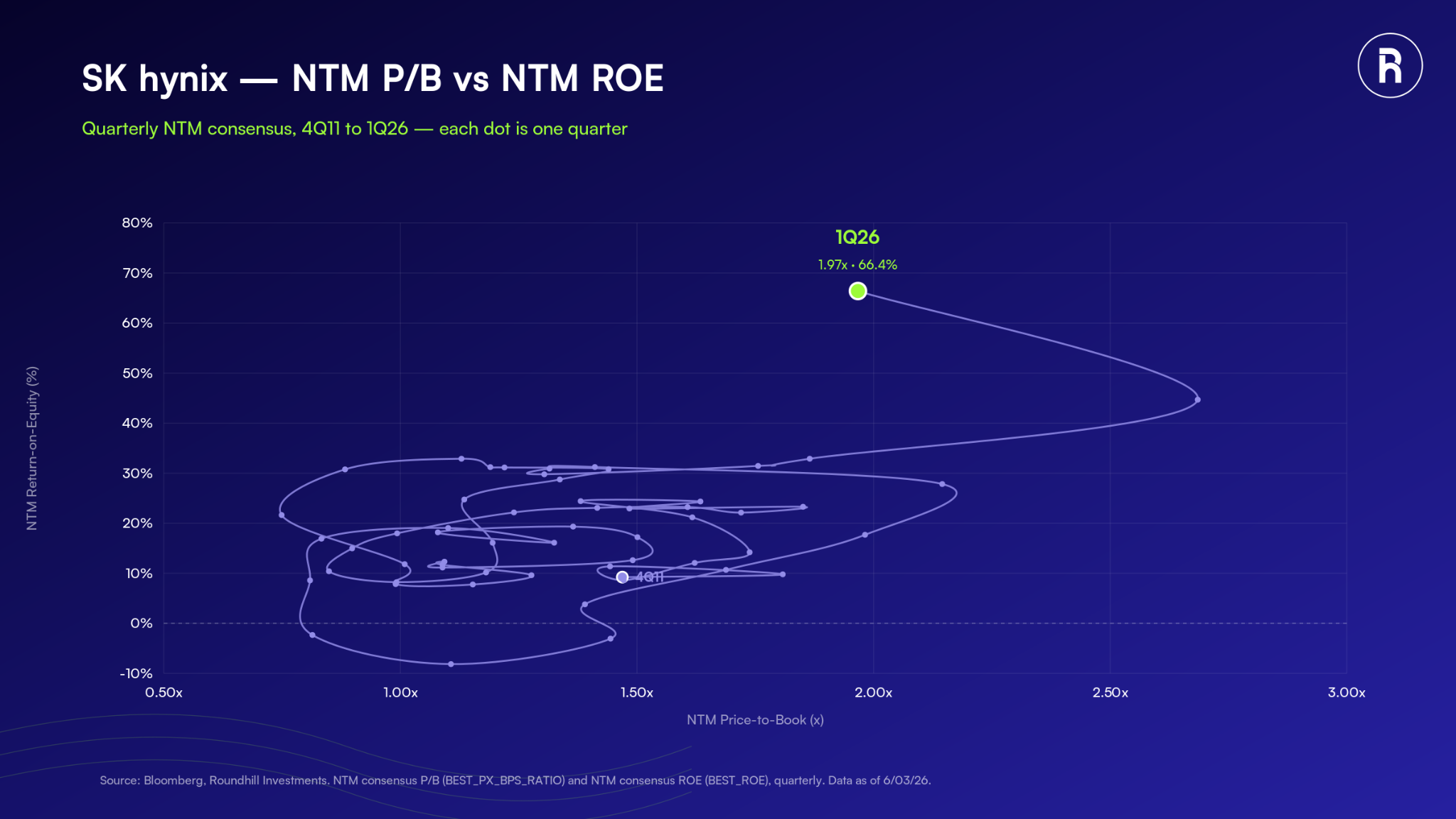
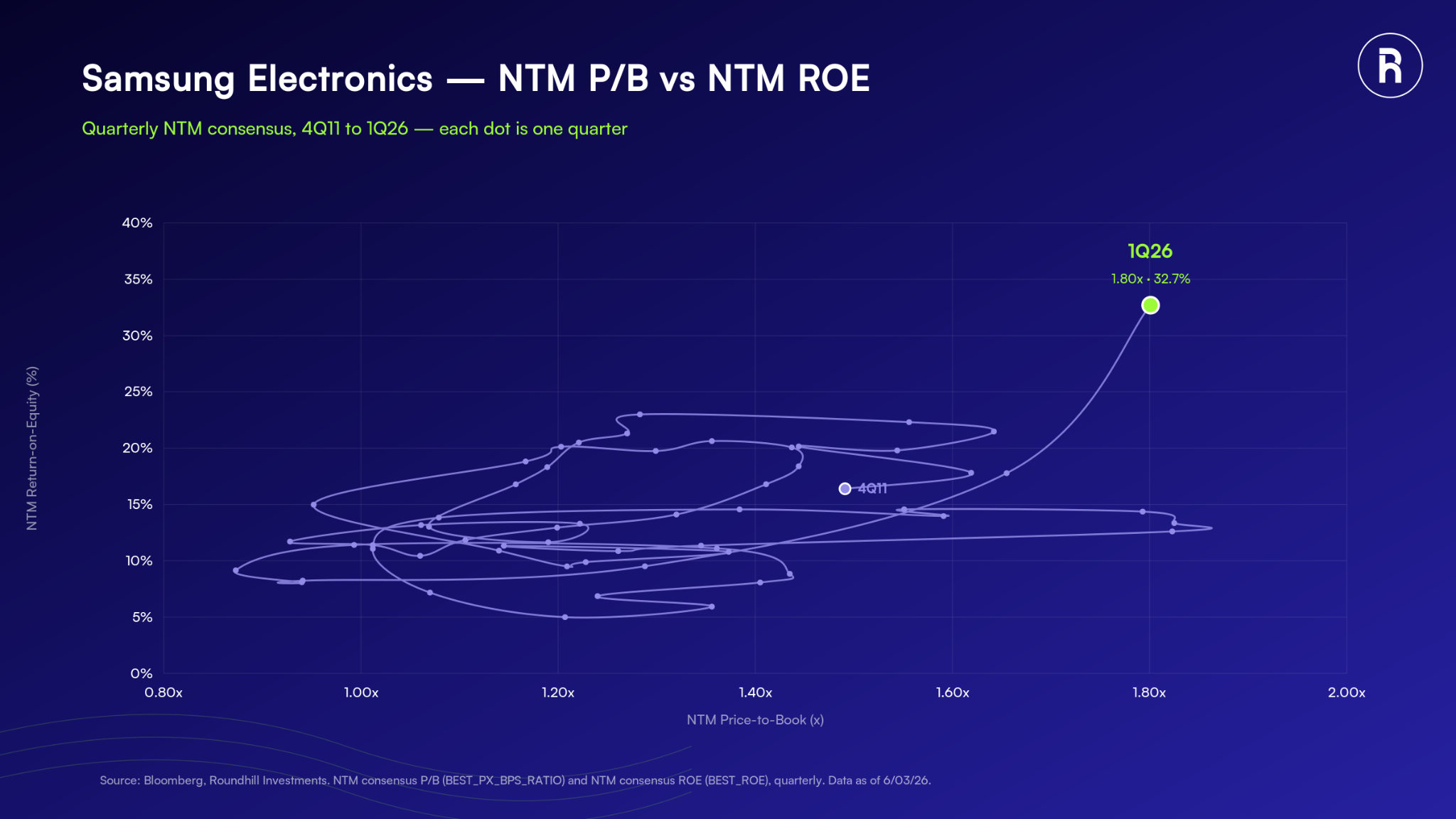
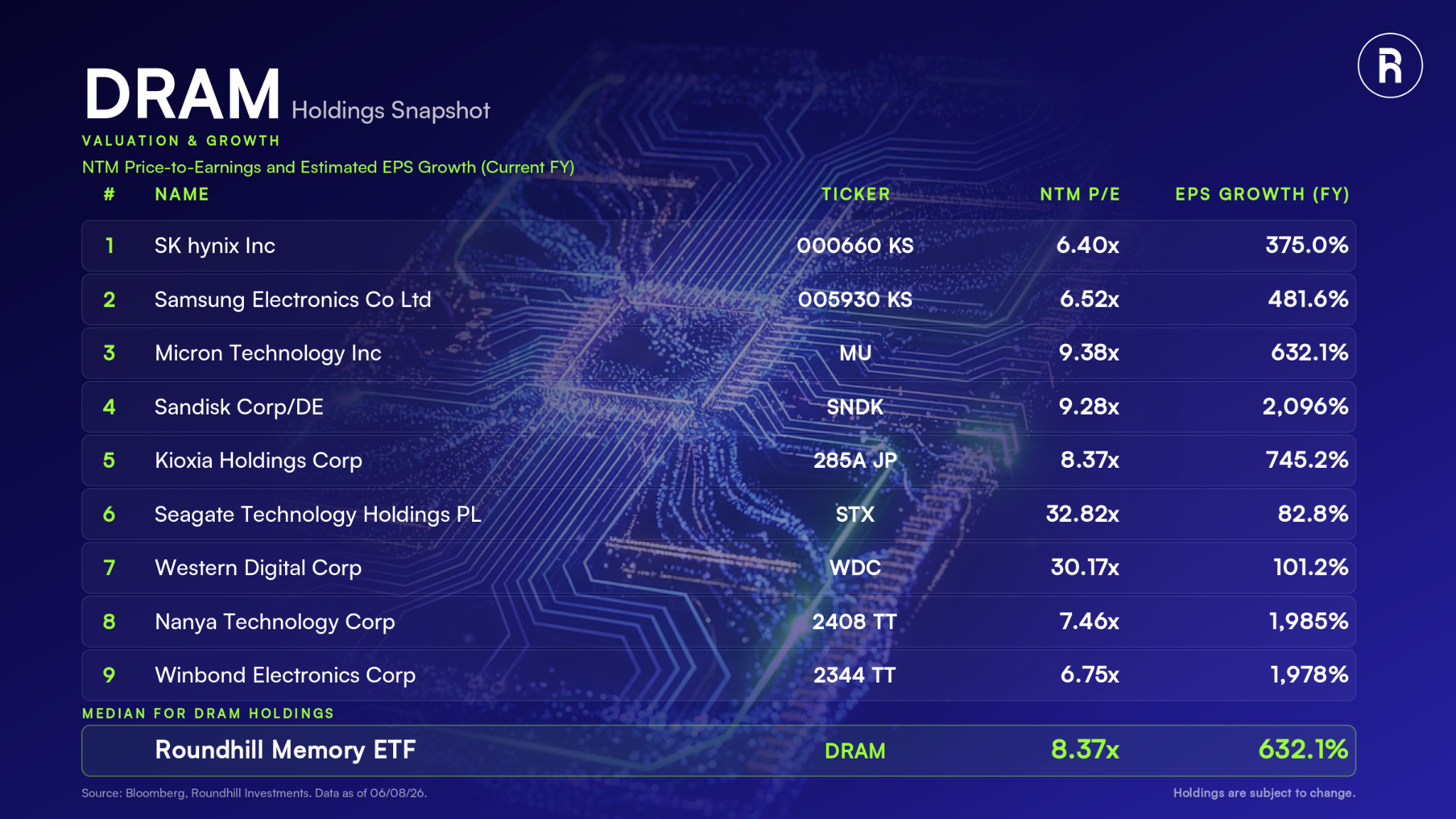
Despite the magnitude of recent stock moves, the median NTM price to earnings ratio across DRAM holdings sits at just 8.37x, a compelling value proposition when compared to broader Technology stocks. Meanwhile, the median estimated earnings per share (EPS) growth for the current fiscal year across the portfolio is 632%. We are hard pressed to say memory stocks are overvalued, as this applies old data to an industry in a new era. In our view, that gap between historical valuation convention and current fundamental performance is where the opportunity lives.
Why We’re Not Worried
Skepticism around whether meteoric price action is justified is fair. Fundamentals always matter over the long run. In this case, the fundamentals are precisely the reason memory stocks have moved. The old cycle was driven by demand spikes with no ceiling, manufacturers who overbuilt, and prices that inevitably crashed. What we see today is structurally different: a manufacturing moat that limits new entrants, a supply constraint that the industry's own leaders say runs through 2030, and an earnings cycle that is only beginning to reflect the scale of AI infrastructure buildout underway. We do not believe the market is not pricing euphoria yet. It is pricing a new era for an industry that spent decades in boom and bust. In our view, DRAM offers a compelling way to participate in it.
Learn more about DRAM: https://www.roundhillinvestments.com/etf/dram/
Glossary
Price-to-Book Ratio (P/B) A valuation metric that compares a company's stock price to its book value per share, where book value represents total assets minus total liabilities. A P/B ratio below 1 suggests the stock may be trading at a discount to its net assets, while a higher ratio reflects market confidence in future earnings potential beyond what appears on the balance sheet. The ratio is most commonly used to evaluate banks, financials, and asset-heavy businesses.
Return on Equity (ROE) A measure of how efficiently a company generates profit from shareholders' equity. Calculated by dividing net income by shareholders' equity, ROE is expressed as a percentage and indicates how well management is deploying invested capital to produce earnings. A consistently high ROE relative to industry peers is generally considered a sign of competitive strength and effective capital allocation.
Price-to-Earnings Ratio (P/E) One of the most widely used valuation metrics in equity analysis, the P/E ratio divides a company's stock price by its earnings per share. It reflects how much investors are willing to pay for each dollar of earnings. A higher P/E can signal growth expectations or, in some cases, overvaluation, while a lower P/E may indicate an undervalued stock or a business facing structural challenges. P/E ratios are most useful when compared against historical averages or sector peers.
Earnings Per Share (EPS) The portion of a company's net income allocated to each outstanding share of common stock, calculated by dividing net income by total shares outstanding. EPS is a foundational measure of corporate profitability and a key input in valuation models, including the P/E ratio. Analysts track both reported EPS and adjusted EPS, the latter of which strips out one-time items to better reflect underlying business performance.
Investors should consider the investment objectives, risks, charges, and expenses carefully before investing. For a prospectus or summary prospectus, if available, with this and other information about the Fund, please call 1-855-561-5728 or visit our website at www.roundhillinvestments.com/etf/DRAM. Read the prospectus or summary prospectus carefully before investing.
Memory Companies Risk. The Fund invests in Memory Companies, which may have limited product lines, markets, financial resources or personnel and are subject to the risks of changes in business cycles, world economic growth, technological progress and government regulation. These companies are also heavily dependent on intellectual property rights, and challenges to or misappropriation of such rights could have a material adverse effect on such companies. Securities of Memory Companies tend to be more volatile than securities of companies that rely less heavily on technology. Memory Companies typically engage in significant amounts of spending on research and development, and rapid changes to the field could have a material adverse effect on a company’s operating results. Additionally, the development, manufacturing, and commercialization of semiconductor memory technologies, including HBM, DRAM and NAND, as well as related subsystems, equipment, materials, and services, are complex and evolving, and may face unforeseen technical challenges (including yield and integration issues), supply chain disruptions, intense competition and pricing volatility, regulatory developments (including export controls), and market acceptance uncertainties. As a result, investments in Memory Companies may be subject to higher levels of risk and volatility.
Semiconductor Companies Risk. The Fund invests in companies primarily involved in the design, distribution, manufacture and sale of semiconductors. Semiconductor companies are significantly affected by rapid obsolescence, intense competition and global demand. The Fund is also subject to the risk that the securities of such issuers will underperform the market as a whole due to legislative or regulatory changes. The prices of the securities of semiconductor companies may fluctuate widely in response to such events.
Line of Business Risk. Certain companies included in the Fund’s portfolio will be engaged in other lines of business unrelated to the development of memory products, and these lines of business could adversely affect their operating results. The operating results of these companies may fluctuate as a result of these additional risks and events in the other lines of business. Despite a company’s possible success in activities linked to its development of memory products, there can be no assurance that the other lines of business in which these companies are engaged will not have an adverse effect on a company’s business or financial condition.
Active Management Risk. The Fund is actively-managed and its performance reflects investment decisions that the Adviser and/or Sub-Adviser makes for the Fund. Such judgments about the Fund’s investments may prove to be incorrect. If the investments selected and the strategies employed by the Fund fail to produce the intended results, the Fund could underperform as compared to other funds with similar investment objectives and/or strategies, or could have negative returns.
Concentration Risk. The Fund is concentrated in the industry or group of industries comprising the information technology sector. The Fund may be susceptible to an increased risk of loss, including losses due to adverse events that affect the Fund’s investments more than the market as a whole, to the extent that the Fund’s investments are concentrated in the securities and/or other assets of a particular issuer or issuers, country, group of countries, region, market, industry, group of industries, sector, market segment or asset class.
Emerging Markets Risk. The Fund’s investments in emerging markets may be subject to a greater risk of loss than investments in more developed markets. Emerging markets may be more likely to experience inflation, political turmoil and rapid changes in economic conditions than more developed markets. Emerging markets often have less uniformity in accounting and reporting requirements, unreliable securities valuation and greater risk associated with custody of securities.
South Korea Risk. The Fund invests significantly in the securities of South Korean issuers. The Fund is subject to certain risks specifically associated with investments in the securities of South Korean issuers. Substantial political tensions exist between North Korea and South Korea. Escalated tensions involving the two nations and the outbreak of hostilities between the two nations, or even the threat of an outbreak of hostilities, could have a severe adverse effect on the South Korean economy. In addition, South Korea’s economic growth potential has recently been on a decline because of a rapidly aging population and structural problems, among other factors. The South Korean economy is heavily reliant on trading exports, especially to other Asian countries and the U.S., and disruptions or decreases in trade activity could lead to further declines. The South Korean economy’s dependence on the economies of Asia and the U.S. means that a reduction in spending by these economies on South Korean products and services or negative changes in any of these economies may cause an adverse impact on the South Korean economy and therefore, on the Fund’s investments. In addition, South Korea is located in a part of the world that has historically been prone to natural disasters such as earthquakes, hurricanes or tsunamis, and is economically sensitive to environmental events. Any such event may adversely impact South Korea’s economy or business operations of companies in South Korea.
Depository Receipts Risk. Depositary receipts may be less liquid than the underlying shares in their primary trading market. Any distributions paid to the holders of depositary receipts are usually subject to a fee charged by the depositary. Holders of depositary receipts may have limited voting rights, and investment restrictions in certain countries may adversely impact the value of depositary receipts because such restrictions may limit the ability to convert the equity shares into depositary receipts and vice versa. Such restrictions may cause the equity shares of the underlying issuer to trade at a discount or premium to the market price of the depositary receipts.
Preferred Securities Risk. The Fund may invest significantly in depositary receipts whose underlying securities are non-voting preferred securities. Preferred securities combine some of the characteristics of both common stocks and bonds. Preferred securities are typically subordinated to bonds and other debt securities in a company’s capital structure in terms of priority to corporate income, subjecting them to greater credit risk than those debt securities. Generally, holders of preferred securities have no voting rights with respect to the issuing company unless preferred dividends have been in arrears for a specified number of periods, at which time the preferred security holders may obtain limited rights. In certain circumstances, an issuer of preferred securities may defer payment on the securities and, in some cases, redeem the securities prior to a specified date. Preferred securities may also be substantially less liquid than other securities, including common stock.
New Fund Risk. The Fund is a recently organized investment company with a limited operating history. As a result, prospective investors have a limited track record or history on which to base their investment decision.
Non-Diversification Risk. As a “non-diversified” fund, the Fund may hold a smaller number of portfolio securities than many other funds. To the extent the Fund invests in a relatively small number of issuers, a decline in the market value of a particular security held by the Fund may affect its value more than if it invested in a larger number of issuers. The value of the Fund Shares may be more volatile than the values of shares of more diversified funds.
Swap Agreements Risk. The Fund may utilize swap agreements to derive its exposure to Memory Companies. Swap agreements may involve greater risks than direct investment in securities as they may be leveraged and are subject to credit risk, counterparty risk and valuation risk. A swap agreement could result in losses if the underlying reference or asset does not perform as anticipated. In addition, many swaps trade over-the-counter and may be considered illiquid. It may not be possible for the Fund to liquidate a swap position at an advantageous time or price, which may result in significant losses.
Roundhill Financial Inc. serves as the investment advisor. The Funds are distributed by Foreside Fund Services, LLC which is not affiliated with Roundhill Financial Inc., U.S. Bank, or any of their affiliates.